
Blog
News, guides and updates from Angad Aviation — published straight from our ERP.
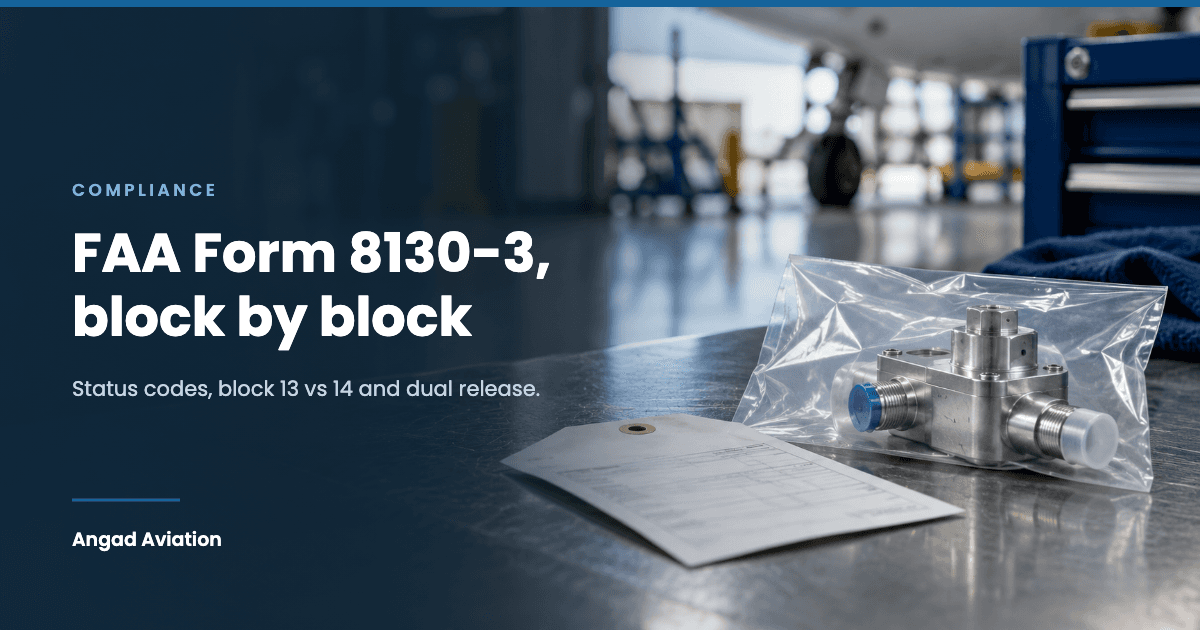
FAA Form 8130-3 explained: every block, the status codes and dual release
The FAA Form 8130-3 is the US Authorized Release Certificate: one form, two uses. The top half describes the part, block 13 releases a new part, and block 14 releases a repaired or overhauled one. Here is what every block means, which status codes are allowed, and how one form can release a part for both the FAA and EASA.
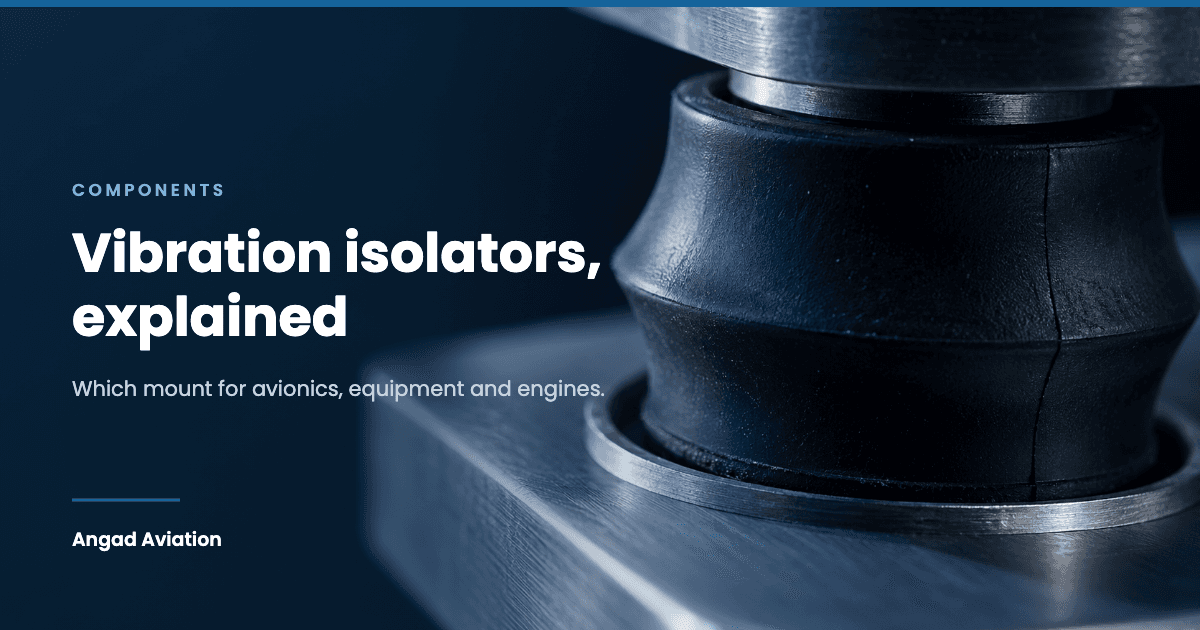
Aircraft vibration isolators: how to choose a mount for avionics, equipment and engines
A vibration isolator only isolates above a certain frequency; below that it does not help, and near its natural frequency it makes vibration worse. Here is how elastomer mounts work, how to read a mount's data, and which Parker LORD mount family fits avionics, equipment and engines.

Aerospace sealants by application: fuel tank, fuselage, access door and firewall
An airframe uses five or six different families of sealant, and they are not interchangeable. Each job — a fuel tank seam, a pressurised fuselage joint, a removable access panel, a firewall penetration — has its own specification. Here is which spec covers which job.
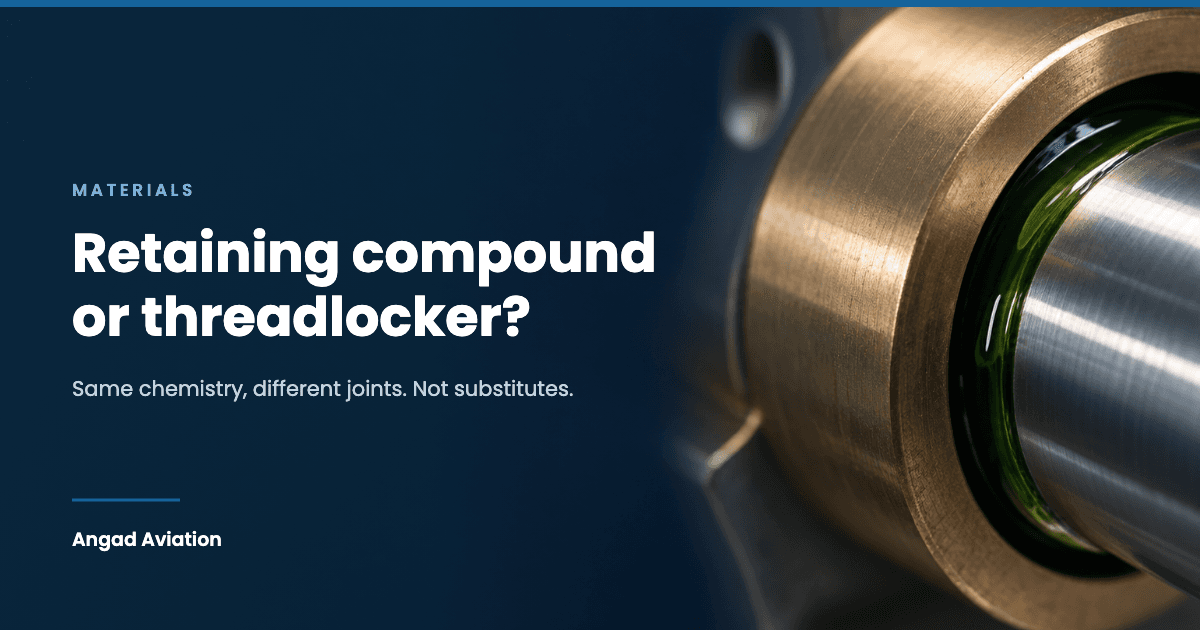
Retaining compounds vs threadlockers: choosing an anaerobic for aviation
Retaining compounds and threadlockers come from the same chemistry and often the same bottle shelf, but they do different jobs. Here is how they cure, what separates one grade from another, and which specification replaced MIL-R-46082.
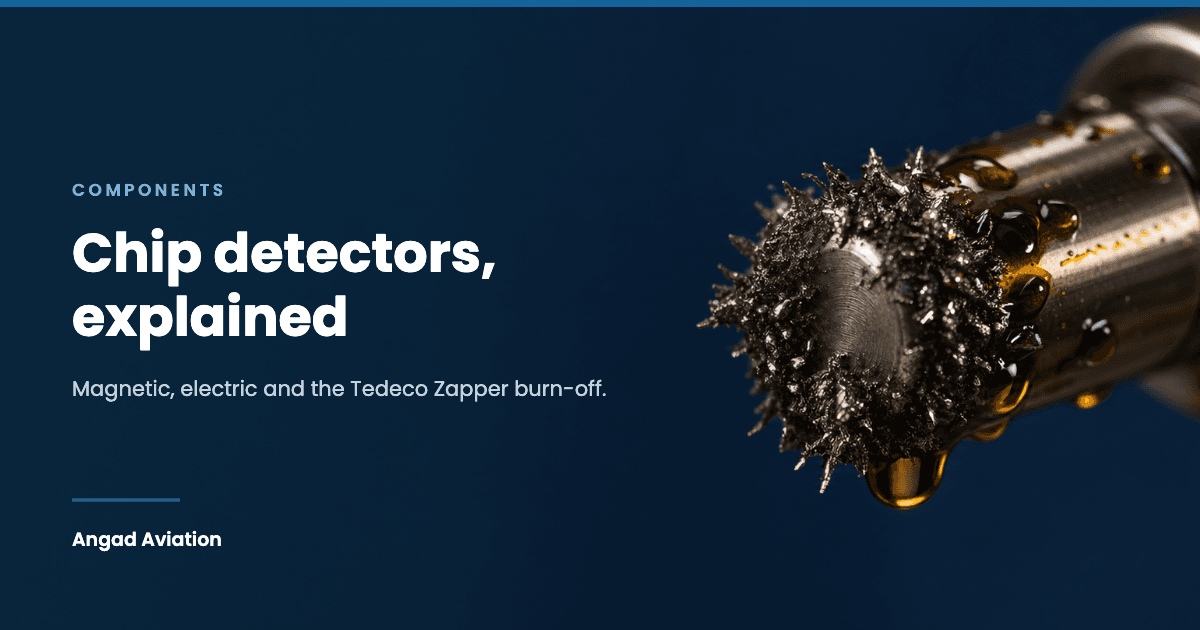
Chip detectors explained: magnetic, electric and Eaton Tedeco Zapper
A chip detector is one of the cheapest early-warning devices on an aircraft: a magnet in the oil that catches the debris a failing bearing or gear sheds. Here is how the magnetic, electric and Eaton Tedeco Zapper types differ.

AN, MS and NAS part numbers explained
A part number like NAS6203-22 is not a catalogue code — it is a reference to a published standard. Knowing which body publishes it, and what the dash number does, is the difference between ordering the right bolt and grounding an aircraft.

Choosing an aerospace corrosion-inhibiting sealant
Three different products get called corrosion protection on a purchase order — a sealant, a compound and a primer — and they are not substitutes for each other. Here is what separates them, and how to read the class code on a sealant tin.

What traceability actually means on a purchase order
Traceability is the most-used word in aerospace parts supply and the least often defined. It is not a quality claim or a reassurance — it is a specific, checkable chain of documents.

Certificate of Conformance vs EASA Form 1 vs FAA 8130-3
A Certificate of Conformance and an authorized release certificate are often filed in the same folder and treated as equivalent. They are not. One is a supplier's own word; the other is an approved organisation's release.

How to Verify an EASA Form 1 or FAA 8130-3 Certificate Online
A certificate is only useful if you can check it. Here's how to confirm an authorized release certificate matches its sealed original in seconds — no login required.

EASA Form 1 vs FAA 8130-3: What's the Difference?
EASA Form 1 and FAA 8130-3 both certify that an aviation part is airworthy — but they come from different authorities and aren't always interchangeable. Here's the practical difference for buyers.

NDT Consumables Explained: Penetrants, Developers and Removers
Penetrants, developers, removers and magnetic powders — a plain-English guide to the non-destructive testing consumables used in aircraft inspection, and how to choose the right ones.

How Aircraft Parts Traceability Prevents Counterfeit Components
Counterfeit parts threaten flight safety and certification. Here's how end-to-end traceability keeps MRO, airline, and manufacturer supply chains safe and audit-ready.